
|
| You might also like: | Sunspots | Birth of the Sun - Zoom Astronomy | Death of the Sun - Zoom Astronomy | Write Ten Things About the Sun | The Sun | Today's featured page: Art Activities and Projects for Students |
| Our subscribers' grade-level estimate for this page: 4th - 5th |
| Table of Contents | Enchanted Learning All About Astronomy |
Site Index |
| Our Solar System | Stars | Glossary | Printables, Worksheets, and Activities | ||||||
| The Sun | The Planets | The Moon | Asteroids | Kuiper Belt | Comets | Meteors | Astronomers | ||
| THE SUN |
| Introduction to the Sun | Solar Structure | Size, Mass | Flares, |
Sun's Birth | Solar Eclipses | Activities, Web Links |
|---|---|---|---|---|---|---|
| Solar Rotation | Sunspots | Sun's Death |
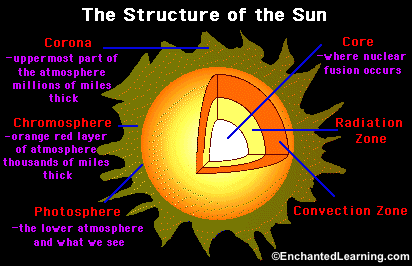
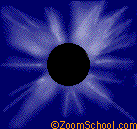 The Corona: This is the outer layer of the Sun's atmosphere. The corona extends for millions of miles and the temperatures are tremendous, reaching one million °C.
Enchanted Learning®
Over 35,000 Web Pages
Sample Pages for Prospective Subscribers, or click below
|
Overview of Site What's New Enchanted Learning Home Monthly Activity Calendar Books to Print Site Index K-3 Crafts K-3 Themes Little Explorers Picture dictionary PreK/K Activities Rebus Rhymes Stories Writing Cloze Activities Essay Topics Newspaper Writing Activities Parts of Speech Fiction The Test of Time
|
Biology Animal Printouts Biology Label Printouts Biomes Birds Butterflies Dinosaurs Food Chain Human Anatomy Mammals Plants Rainforests Sharks Whales Physical Sciences: K-12 Astronomy The Earth Geology Hurricanes Landforms Oceans Tsunami Volcano |
Languages Dutch French German Italian Japanese (Romaji) Portuguese Spanish Swedish Geography/History Explorers Flags Geography Inventors US History Other Topics Art and Artists Calendars College Finder Crafts Graphic Organizers Label Me! Printouts Math Music Word Wheels |
Click to read our Privacy Policy
| Search the Enchanted Learning website for: |