
|
| You might also like: | Fossa Printout | Zorilla Printout | Whippet Printout | Shrew Printout | Pronghorn Printout | Today's featured page: USA Regional Map/Quiz Printouts |
| EnchantedLearning.com More Mammal Printouts |
Karakul Sheep |
Animal Printouts Label Me! Printouts |
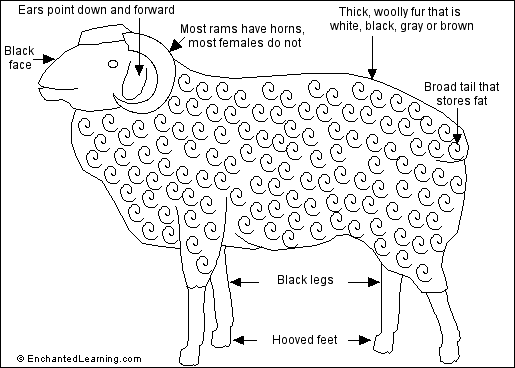
Anatomy: Karakul sheep are have a wide, fat tail that stores fat (much like a camel's hump does). Lambs are usually born with black fleece. As the lamb matures, its color usually changes, often becoming lighter with age.
Rams weigh from 175 to 225 pounds; ewes weigh from 100 to 150 pounds. The head is narrow and long.
The curving horns are usually black; they continue to grow throughout the sheep's lifetime and do not drop off. Most rams (males) have horns, most ewes (females) do not. The horns are made of keratin, the same material our fingernails are made of; growth rings (called annuli) on the horns tell us how old a sheep is.
Diet: Karakul sheep are herbivores (plant-eaters) who spend most of the day grazing. They eat grass, leaves, herbs, twigs, and shoots. Sheep swallow their food without chewing it much. Later, they regurgitate the food (then called a cud) and chew it thoroughly before swallowing it again.
Predators: Wolves, big cats, bears, and humans are predators of sheep.
Classification: Class Mammalia (mammals), order Artiodactyla (even-toed hoofed mammals), family Bovidae (antelope, cattle, goats, sheep), genus Ovis, species O. aries.
| Search the Enchanted Learning website for: |