
|
| You might also like: | Silk - Invention | Cicada Printout (simplel version) | Luna Moth Printout | Cicada Label Me! Printout | Zebra Swallowtail butterfly Printout | Today's featured page: Art Activities and Projects for Students |
| Our subscribers' grade-level estimate for this page: 2nd - 3rd |
| Butterfly and Moth Printouts All About Butterflies |
Animal Printouts Label Me! Printouts |
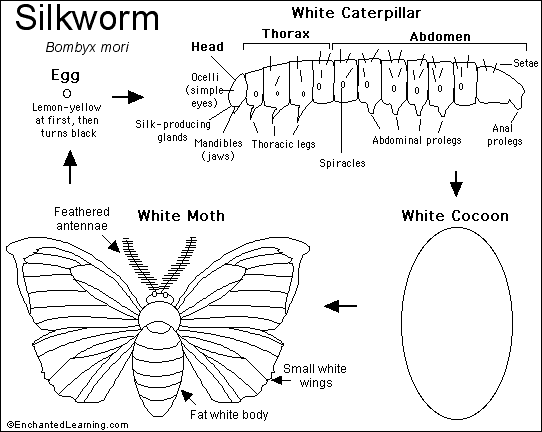
Silk: The silk from the silkworm's cocoon is a single, continuous thread. It is made of a protein that is secreted from two salivary glands in the caterpillar's head. The Chinese have harvested silk from silkworm cocoons for thousands of years. To harvest silk, the silkworm is allowed to spin its cocoon and it is then put in boiling water to kill the pupa and help unravel the thread. Each cocoon contains a single silk thread that is about 300 to 900 meters long. The silkworm has been domesticated to the point where it could no longer survive in the wild. The adult moth cannot eat or fly; it has a fat body and small wings.
Lifecycle: The tiny Silkworm larva hatches from a tiny black egg. The larva eats mulberry (Morus alba) leaves almost constantly for 4 to 6 weeks until it is 2 3/4 inches long. The white caterpillar molts its skin many times during this stage. The caterpillar then pupates; it spins a white silk cocoon around itself (in a process taking 3 or more days). The silk covers a hard brown-shelled pupa. In roughly three weeks, the adult moth emerges. This white moth cannot fly; it reproduces and dies within about five days (the female lays from 200 to 500 lemon-yellow eggs that eventually turn black).
Classification: Class Insecta (insects), Order Lepidoptera (butterflies and moths), Suborder Ditrysia (Moths, Butterflies, Skippers), Superfamily Bombycoidea, Family Bombycidae, Genus Bombyx, Species B. mori.
| Search the Enchanted Learning website for: |