
|
| You might also like: | Eagle Printouts | Bald Eagle | White Dove (pigeon) Printout | Peregrine Falcon Printout | Harpy Eagle Printout | Today's featured page: The Gingerbread Man |
| Bird Printouts | EnchantedLearning.com Golden Eagle |
Animal Printouts Label Me! Printouts |
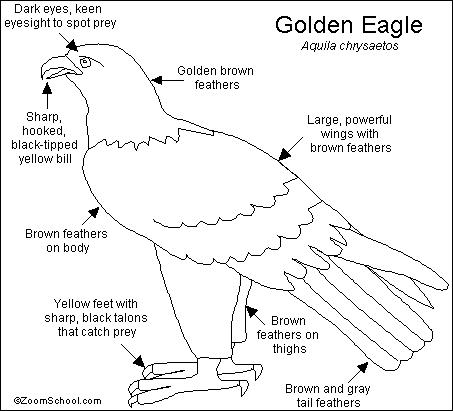
Anatomy: Golden Eagles have a long, downward-curving, black-tipped yellow bill, and large, keen, dark eyes. The feet have knife-like talons. These strong fliers have brown feathers on their body and wings; the head and neck have golden-brown feathers. Juveniles have a have a patch of white on the tail. Eagles have about 7,000 feathers. Adult Golden Eagles have a 6 to 7 ft (1.8-2.1 m) wingspan and are 30 to 35 inches (75-90 cm) long. The females are larger than the males, but their plumage is similar.
Diet: Eagles are carnivores; they hunt and scavenge during the day (they are diurnal). They eat hares, rabbits, large rodents, small mammals, reptiles, grouse and other birds. The eagle dives down onto its prey and catches it with outstretched, clawed feet.
Eggs and Nests: Golden Eagles build a large nest made of sticks and twigs. Nests, called aeries, are usually located high in trees or on cliffs. Females lay 1-4 eggs in each clutch (a set of eggs laid at one time). Eggs are white with light brown markings. Both parents care for the young.
| Search the Enchanted Learning website for: |