
|
| You might also like: | Label Skin Diagram Printout | Urinary System | Label the Urinary Tract #1 Printout | Eye Anatomy Diagram | Brain Glossary | Today's featured page: Leaf Tracing/Cutting Template |
| Our subscribers' grade-level estimate for this page: 5th - 6th |
| Body-Related Books to Print | EnchantedLearning.com Human Anatomy |
Anatomy Index |
| Brain | Digestive System | Ears | Eyes | Heart | Lungs | Skeleton | Skin | Teeth | Urinary System | Classroom Activities |
| Skin Anatomy Label Me! Printout |
Skin is made up of two layers that cover a third fatty layer. The outer layer is called the epidermis; it is a tough protective layer that contains melanin (which protects against the rays of the sun and gives the skin its color). The second layer (located under the epidermis) is called the dermis; it contains nerve endings, sweat glands, oil glands, and hair follicles. Under these two skin layers is a fatty layer of subcutaneous tissue (the word subcutaneous means "under the skin").
On average, an adult has from 18-20 square feet (about 2 square meters) of skin, which weighs about 6 pounds (2.7 kg).
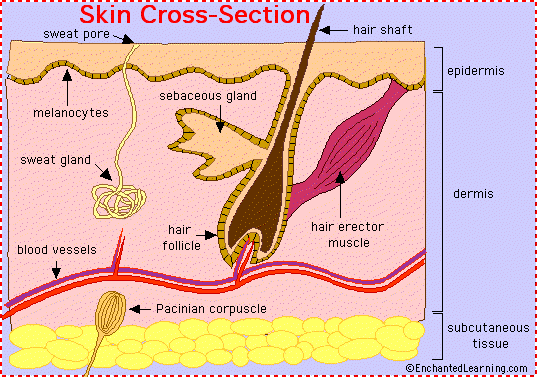
| blood vessels - Tubes that carry blood as it circulates. Arteries bring oxygenated blood from the heart and lungs; veins return oxygen-depleted blood back to the heart and lungs. dermis - (also called the cutis) the layer of the skin just beneath the epidermis. epidermis - the outer layer of the skin. hair follicle - a tube-shaped sheath that surrounds the part of the hair that is under the skin. It is located in the epidermis and the dermis. The hair is nourished by the follicle at its base (this is also where the hair grows). hair shaft - The part of the hair that is above the skin. hair erector muscle - a muscle is connected to each hair follicle and the skin - it contracts (in response to cold, fear, etc.), resulting in an erect hair and a "goosebump" on the skin. melanocyte - a cell in the epidermis that produces melanin (a dark-colored pigment that protects the skin from sunlight). Pacinian corpuscle - nerve receptors that respond to pressure and vibration; they are oval capsules of sensory nerve fibers located in the subcutaneous fatty tissue sebaceous gland - a small, sack-shaped gland that releases oily (fatty) liquids onto the hair follicle (the oil lubricated and softens the skin). These glands are located in the dermis, usually next to hair follicles. sweat gland - (also called sudoriferous gland) a tube-shaped gland that produces perspiration (sweat). The gland is located in the epidermis; it releases sweat onto the skin.
subcutaneous tissue - fatty tissue located under the dermis. |
Worksheet to Print
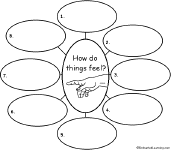 Senses: Write Eight Touch-Related Words Think of and write eight touch-related adjectives, describing how things feel. Sample answers: hard, soft, hot, cold, rough, smooth, grainy, sharp. |
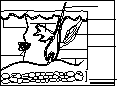 Skin Anatomy Diagram to Label Label the skin anatomy diagram. Or go to the answers. |
Enchanted Learning®
Over 35,000 Web Pages
Sample Pages for Prospective Subscribers, or click below
|
Overview of Site What's New Enchanted Learning Home Monthly Activity Calendar Books to Print Site Index K-3 Crafts K-3 Themes Little Explorers Picture dictionary PreK/K Activities Rebus Rhymes Stories Writing Cloze Activities Essay Topics Newspaper Writing Activities Parts of Speech Fiction The Test of Time
|
Biology Animal Printouts Biology Label Printouts Biomes Birds Butterflies Dinosaurs Food Chain Human Anatomy Mammals Plants Rainforests Sharks Whales Physical Sciences: K-12 Astronomy The Earth Geology Hurricanes Landforms Oceans Tsunami Volcano |
Languages Dutch French German Italian Japanese (Romaji) Portuguese Spanish Swedish Geography/History Explorers Flags Geography Inventors US History Other Topics Art and Artists Calendars College Finder Crafts Graphic Organizers Label Me! Printouts Math Music Word Wheels |
Click to read our Privacy Policy
| Search the Enchanted Learning website for: |